


Mongolia or Inner Mongolia? What Travellers From Singapore, Malaysia and Hong Kong Should Know

Mongolia and Inner Mongolia are not the same place. Mongolia is an independent country with its capital in Ulaanbaatar; Inner Mongolia is an autonomous region of China with its capital in Hohhot. The difference decides your visa, your flight and the trip you get: Singapore and Malaysia passport holders can stay in Mongolia for 30 days without a visa and Hong Kong SAR passport holders for 14 days, as of 3 November 2026.
Key facts
Mongolia: Independent country; capital Ulaanbaatar; 1,564,241 km²; about 3.53 million people (Britannica)
Inner Mongolia: Autonomous region of China since 1947; capital Hohhot (Britannica)
Visa-free: Singapore, Malaysia, Japan 30 days; Hong Kong SAR 14 days (as of 3 Nov 2026)
Direct flight: MIAT Singapore–Ulaanbaatar, twice weekly, 15 Dec 2026 – 17 Jan 2027
Scripts: Mongolia: Cyrillic, plus traditional script on state documents since 2 Jan 2025
Visitors: 919,104 foreign tourists, 1 Jan – 29 Oct 2026 (record)
Source: Consular Department of Mongolia, Britannica, AeroRoutes, Montsame
Mongolia welcomed 919,104 foreign tourists between 1 January and 29 October 2026, a record, according to Montsame, citing the Mongolian Tourism Association. From 15 December 2026, MIAT Mongolian Airlines flies nonstop between Singapore and Ulaanbaatar for the year-end holidays.

Mongolia vs Inner Mongolia: what is the difference?
Mongolia (Mongol Uls) is a sovereign, landlocked country between Russia and China, with an area of 1,564,241 square kilometres and about 3.53 million people, according to Encyclopaedia Britannica. Its capital is Ulaanbaatar.
Inner Mongolia (Nei Mongol Zizhiqu) is an autonomous region of the People's Republic of China, bordering Mongolia to the south. Britannica gives its area as about 1,177,500 square kilometres and its 2010 census population as 24.7 million, mostly Han Chinese, with Mongols as the largest minority. Its main cities are Hohhot, Baotou, Chifeng and Hailar, and Chinese is the most widely used language.
In short: if an itinerary names Ulaanbaatar, the Gobi of Ömnögovi, Kharkhorum or Khuvsgul Lake, it is in Mongolia. If it names Hohhot, Baotou or Hailar, it is in China.
Why are there two Mongolias?
The split goes back to the Qing dynasty. The Manchu rulers took control of the southern Mongols before they conquered China and organised that region as a military reserve, which is where the idea of an "Inner" Mongolia comes from, according to Britannica's history of Mongolia. The northern Khalkha princes accepted Qing rule later, at the Dolon Nor convention of 1691, and became "Outer" Mongolia.
When the Qing collapsed in 1911–12, the Bogd Khan declared Outer Mongolia's independence. The revolution of 1921 and the Mongolian People's Republic of November 1924 followed, and peaceful reforms in 1990 brought multiparty elections and a new constitution. Inner Mongolia took a different path: the Inner Mongolia Autonomous Region was set up in 1947, two years before the People's Republic of China, according to Britannica's history of Inner Mongolia.
Our guide to Ulaanbaatar's history museums shows where to follow this story.
Is the culture the same on both sides of the border?
The Mongolian language is shared, but daily life differs. Britannica notes that the Mongolian dialects of Inner Mongolia are nearly the same as Khalkha, the main dialect of Mongolia.
The scripts are a visible difference. Mongolia writes in Cyrillic and also uses the traditional vertical Mongolian script: since 2 January 2025, government documents are issued in both, under the Law on the Mongolian Language, as Kazinform reported, citing Montsame. In Inner Mongolia, Britannica notes, a Cyrillic alphabet was tried in 1955 before the traditional Mongolian script was brought back.
For a traveller, Mongolia is where nomadic herding is still a national way of life rather than a show. You will see the deel worn on winter streets (our guide to the Mongolian deel explains the styles) and you can stay with herding families in Terelj National Park, close to the capital.

Do I need a visa for Mongolia from Singapore, Malaysia or Hong Kong?
No, for short visits. The Consular Department of Mongolia's Ministry of Foreign Affairs lists these visa-free stays (read 3 November 2026):
Singapore: up to 30 days, all passports.
Malaysia: up to 30 days, all passports.
Japan: up to 30 days, all passports.
Hong Kong SAR: up to 14 days, all passports.
These are standing agreements, not the temporary tourism exemption that ends on 31 December 2026. Inner Mongolia is a different case: it follows China's entry rules, so check China's official sources if your trip goes there.
How do I get to Mongolia from Singapore this winter?
MIAT Mongolian Airlines flies Singapore–Ulaanbaatar nonstop twice a week from 15 December 2026 to 17 January 2027 on a Boeing 767-300ER, according to AeroRoutes. Flight OM1724 leaves Singapore at 19:25 and lands in Ulaanbaatar at 02:55 the next day; OM1723 leaves Ulaanbaatar at 09:30 and reaches Singapore at 16:55.
Our 6-day winter itinerary on the MIAT flights shows how a short trip fits around the schedule. For routes from Kuala Lumpur and Hong Kong, see our Malaysia to Mongolia guide and Hong Kong to Mongolia guide.
What this means for your trip
Check the cities on any "Mongolia" itinerary: Ulaanbaatar means Mongolia; Hohhot, Baotou or Hailar mean Inner Mongolia, China.
Check your passport against the right country's rules: 30 days visa-free in Mongolia for Singapore and Malaysia, 14 days for Hong Kong SAR.
For a short first visit, combine the capital with the countryside, for example our 3-day cultural tour of Ulaanbaatar, the Chinggis Khaan statue and Terelj.
Muslim travellers can read our halal food guide to Mongolia.
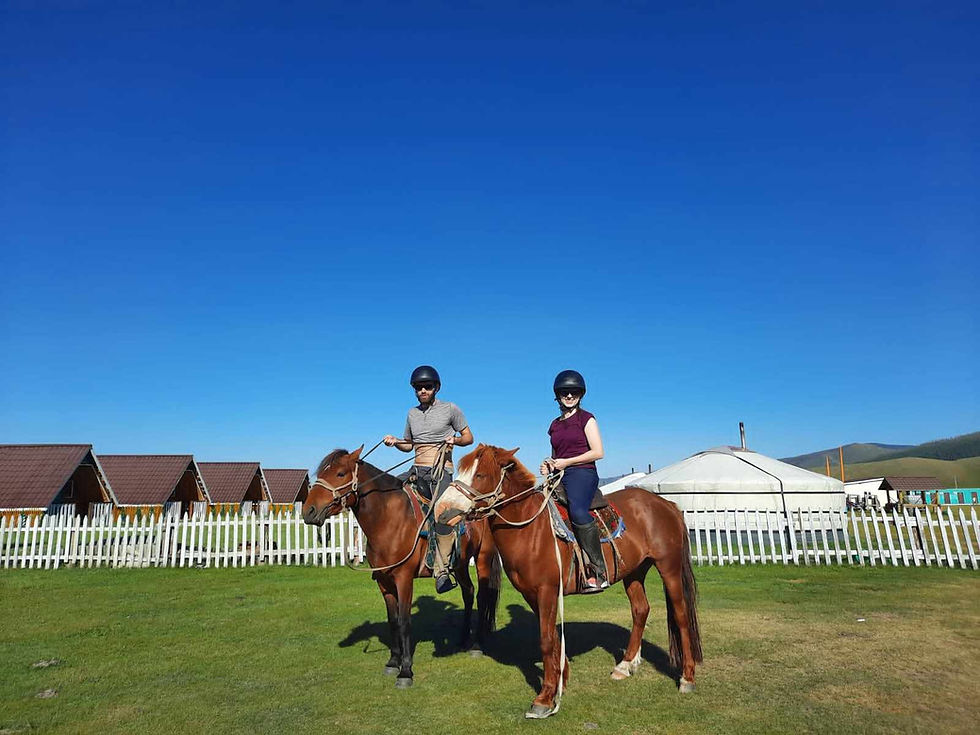
How Enza Tours can help
We are a Mongolian operator based in Ulaanbaatar, and every trip we run is in Mongolia itself. We plan short trips from Singapore, Kuala Lumpur and Hong Kong around your flights and visa-free stay, with English-speaking guides and family stays. Planning from Singapore? Tell us your dates and we will suggest a route.
Frequently asked questions
Is Inner Mongolia the same as Mongolia?
No. Mongolia is an independent country with its capital in Ulaanbaatar. Inner Mongolia is an autonomous region of China, set up in 1947, with its capital in Hohhot.
Do I need a visa for Mongolia from Singapore?
No. Singapore passport holders can stay in Mongolia for up to 30 days without a visa, according to Mongolia's Consular Department (as of 3 November 2026). Malaysia is also 30 days and Hong Kong SAR 14 days.
Is there a direct flight from Singapore to Ulaanbaatar?
Yes, seasonally. MIAT Mongolian Airlines flies Singapore–Ulaanbaatar nonstop twice a week from 15 December 2026 to 17 January 2027, according to AeroRoutes.
Why is Mongolia called "Outer Mongolia"?
"Outer Mongolia" is an old Qing-dynasty name for the northern Khalkha lands, which joined the Qing empire after the southern "Inner" region. Mongolia declared independence in 1911–12 and today's official name is simply Mongolia (Mongol Uls).
Tours that fit this story
Hand-picked from our current programmes. See all of them on our Mongolia short tours page.
Cultural Tours Mongolia (3 days): Ulaanbaatar, the Tsonjin Boldog statue and Terelj National Park.
Ulaanbaatar City Tour (1 day): Gandan Monastery, the central square and Zaisan Hill; ideal for short stopovers.
2 Days Terelj National Park Tour: A night with a nomadic family in Terelj.
Sources
Encyclopaedia Britannica: Mongolia, the ascendancy of the Manchu (read 3 Nov 2026)
Encyclopaedia Britannica: Inner Mongolia, history (read 3 Nov 2026)
Consular Department, Ministry of Foreign Affairs of Mongolia: visa-free countries (read 3 Nov 2026)
AeroRoutes: MIAT shortens Singapore seasonal service in NW26 (29 Sep 2026)
About this article
Written by the Enza Tours News Desk in Ulaanbaatar and checked by our team before publishing. Every date, number and rule in this post comes from the sources listed above, which we read on 3 November 2026. Last updated: 3 November 2026.
About Enza Tours LLC. We are a Mongolian inbound tour operator, founded in 2018 by Enkhzaya (Enza), and a member of the Mongolia Tourism Organization (MTO) and the Mongolian Tourism Association (MTA). Office: Room 39, Building 33, 4th Khoroo, Baga Toiruu Street, Chingeltei District, Ulaanbaatar 15141, Mongolia. Phone +976 8911 2100 · info@mongoliantour.guide · Meet our team · Contact us


