


Winter Is Deel Season: A Traveller's Guide to Mongolia's National Dress

The Mongolian deel, the country's long, high-collared national dress, is changing weight for winter. With average October lows in Ulaanbaatar of around −7°C, herders swap the light terleg for a deel lined with sheepskin or wool. For travellers arriving this autumn and winter, the deel is the easiest way into Mongolian culture: you will see it at every celebration, and you can wear one yourself.
Key facts
What: The deel: Mongolia's full-length national robe, tied with a long silk sash
Seasons: Dan deel (unpadded), terleg (lightly padded), winter deel (sheepskin or wool lining)
Weather now: Ulaanbaatar in October: average highs about 7°C, lows about −7°C
Hats: 100+ traditional styles; the pointed hat's 32 seams stand for 32 tribes
Festival: 'Mongolians in Deel', National Costume Day at Naadam in July; 7,000+ took part in 2025; 2027 date not yet published
Visa-free stays: Singapore, Malaysia, Japan 30 days; Hong Kong SAR 14 days (MFA, checked 15 Oct 2026)
Source: Montsame, National Museum of Mongolia, Mongolia MFA, weather2travel, My Modern Met

Why is the Mongolian deel in the news this season?
Because winter is when the deel does its real work. Ulaanbaatar's October days average about 7°C and nights about −7°C, according to weather2travel's climate data, and some precipitation falls as snow.
The deel has also travelled far from the steppe this year. Mongolia's uniforms for the Milan Cortina 2026 Winter Olympics, made by the Mongolian label Goyol Cashmere, took "clear inspiration from the deel", with a high collar, silk trims and traditional embroidery on Mongolian cashmere, My Modern Met reported on 30 January 2026.
What is a deel?
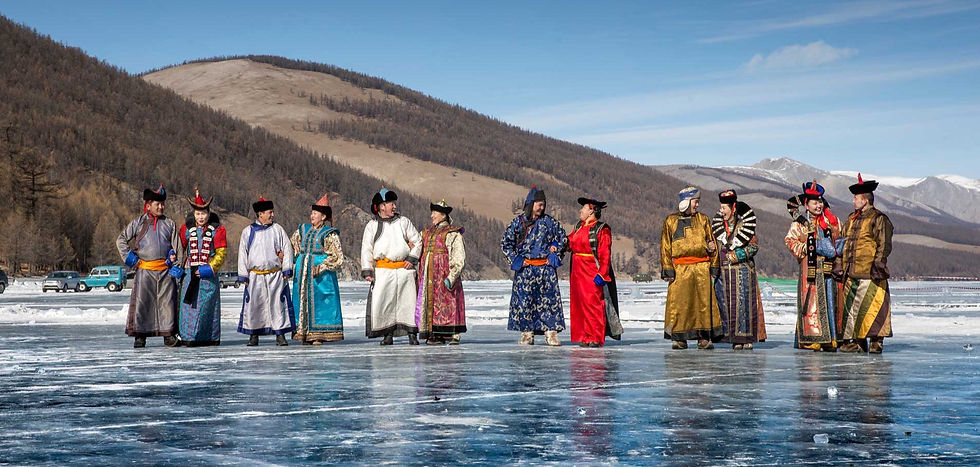
A deel is a full-length, one-piece robe with long sleeves, a high collar and a front that overlaps and fastens at the side. Montsame's guide to Mongolian customs describes it as clothing for workdays and holidays, worn by men and women; men's deels are wider and usually in duller colours.
A silk sash several metres long, often in a contrasting colour, ties it at the waist and also supports the body on long rides.
There are three main weights. The dan deel is unpadded, the terleg is lightly padded, and the winter deel is lined with sheepskin or wool, according to Montsame. On a cold morning in the countryside, the winter deel is coat, blanket and windbreak in one.
What do the colours, hats and boots mean?
Colour tells you about the occasion and often the wearer's ethnic group. Everyday deels tend to be grey, brown or dark, while holiday deels are bright blue, green or red silk. Montsame lists regional preferences: Khalkh red and blue for fire and sky, Bayad purple, and pale blue and bluish-green for Zakhchin women.
Montsame counts more than 100 traditional hat styles. On the classic pointed hat, the peak stands for Mount Sumber, the top knot for national unity and the 32 seams of the cone for the 32 tribes.
The traditional gutal boot is high, stiff leather lined with felt, with an upturned toe, no heel and the same shape for both feet.
The finest historic examples are museum pieces. The National Museum of Mongolia's online exhibit shows a nobleman's ceremonial deel from the 17th to early 20th century in blue silk with a dragon-patterned lining, and women's velvet hats set with coral and turquoise.
Where can visitors see Mongolians in deels?
The biggest show is National Costume Day during the Naadam festival in July. In 2024, the "Mongolians in Deel" festival filled Sukhbaatar Square with teams from Ulaanbaatar's 9 districts and all 21 aimags, plus guests from Buryatia, Tuva, Kalmykia and Inner Mongolia, Montsame reported. There is even an award for the Best Foreigner in Deel. In 2025, more than 7,000 people in traditional dress joined the parade, according to Montsame. The 2027 date has not been published yet.
Outside July, you will see deels at countryside festivals, at Tsagaan Sar (Lunar New Year) family visits, and daily on older herders. The brand Mongol Costumes has staged deel-based fashion shows in about 20 countries, Montsame wrote.

Planning from Singapore, Malaysia, Hong Kong or Japan?
Travellers from these places can visit for a short trip without a visa. The Consular Department of Mongolia's Ministry of Foreign Affairs lists stays of up to 30 days for citizens of Singapore, Malaysia and Japan, and up to 14 days for Hong Kong SAR passport holders (checked 15 October 2026).
Readers in Japan will find this familiar. Montsame places the deel in the same family of Eastern dress as the Japanese kimono, the Korean hanbok and the Indian sari. Our guides for Japan, Malaysia and Hong Kong cover routes and entry rules.
What this means for your trip
Try one on. On our Cultural Tours Mongolia (1 day), you visit a nomadic family near Ulaanbaatar, where the deel is everyday clothing.
Dress for winter like a local. If you travel between October and March, pack proper cold-weather layers; a sheepskin-lined deel is what herders rely on.
Mind the etiquette. Montsame describes a formal greeting in which a man buttons his clothing, tightens his sash and puts on his hat first. Being neatly dressed is a sign of respect.
Read more. See our cultural tours in Ulaanbaatar and nomadic lifestyle tours guides.
How Enza Tours can help
We can build a day around Ulaanbaatar's culture and a nearby nomadic family, or time a longer trip for Naadam once the 2027 dates are confirmed. Tell us your dates, and we will suggest where you are most likely to see, and wear, a deel.
Frequently asked questions
What is a Mongolian deel?
The Mongolian deel is the national dress of Mongolia: a full-length, one-piece robe with a high collar, an overlapping front and a long silk sash. Men and women wear it for everyday work and for holidays such as Naadam and Tsagaan Sar.
What do Mongolians wear in winter?
In winter, many Mongolians, especially herders, wear a winter deel lined with sheepskin or wool, with a fur-trimmed hat and felt-lined gutal boots. Ulaanbaatar's average October lows are already around −7°C.
When is the Mongolian national costume festival?
The "Mongolians in Deel" festival is held on National Costume Day during Naadam in July, on Sukhbaatar Square in Ulaanbaatar. More than 7,000 people took part in 2025; the 2027 date has not yet been announced.
Is the Mongolian deel like a Japanese kimono?
The Mongolian deel belongs to the same broad family of Eastern robes as the Japanese kimono and Korean hanbok, but it is cut for riding and cold, with a high collar and a long sash.
Do I need a visa for Mongolia from Singapore or Malaysia?
No visa is needed for short stays. Mongolia's Ministry of Foreign Affairs lists up to 30 days visa-free for citizens of Singapore and Malaysia, and up to 14 days for Hong Kong SAR passport holders.
Tours that fit this story
Hand-picked from our current programmes. See all of them on our Mongolia short tours page.
Cultural Tours Mongolia (1 day): A nomadic show and a family visit near Ulaanbaatar.
Cultural Tours Mongolia (3 days): Ulaanbaatar, the Tsonjin Boldog statue and Terelj.
Ulaanbaatar City Tour (1 day): Gandan Monastery, the central square and Zaisan Hill.
Sources
Montsame: Mongolian Customs (deel, seasonal deels, hats, boots, colours, etiquette)
Montsame: Mongol Costumes, brand maker from the national costume deel
National Museum of Mongolia: Mongolian Traditional Clothing and Jewelry (Google Arts & Culture)
Mongolia MFA Consular Department: visa-exempt countries (checked 15 Oct 2026)
weather2travel: Ulaanbaatar weather in October (climate averages)
My Modern Met: Mongolia's 2026 Olympic outfits (30 Jan 2026)
About this article
Written by the Enza Tours News Desk in Ulaanbaatar and checked by our team before publishing. Every date, number and rule in this post comes from the sources listed above, which we read on 15 October 2026. Last updated: 15 October 2026.
About Enza Tours LLC. We are a Mongolian inbound tour operator, founded in 2018 by Enkhzaya (Enza), and a member of the Mongolia Tourism Organization (MTO) and the Mongolian Tourism Association (MTA). Office: Room 39, Building 33, 4th Khoroo, Baga Toiruu Street, Chingeltei District, Ulaanbaatar 15141, Mongolia. Phone +976 8911 2100 · info@mongoliantour.guide · Meet our team · Contact us


