Uvurkhangai's Heritage Defender Drive: How to Visit Orkhon Valley Heritage

Uvurkhangai, the central Mongolian province that includes Kharkhorin, the old Mongol capital in the Orkhon Valley, is running a "Heritage Defender" campaign from 15 October to 1 December 2026 to protect its 6,619 registered ancient monuments. For travellers, it is a reminder that central Mongolia's deer stones, stone figures, ruins and monasteries are fragile and protected by law.
Key facts
What: "Heritage Defender" campaign to protect immovable cultural heritage
Where: Uvurkhangai province (all 19 soums), including Kharkhorin in the Orkhon Valley
Dates: 15 October – 1 December 2026
Scale: 6,619 registered heritage items at 440 sites; 14 under national protection
Guardians: About 400 local residents under contract; MNT 40 million a year in incentives
World Heritage: Orkhon Valley Cultural Landscape (2004); Deer Stone Monuments (2023)
Visitor rule: No digging, removing or damaging finds; archaeological finds need approval to export
Source: Montsame (21 Oct 2026), UNESCO, Law on the Protection of Cultural Heritage; as of 24 Oct 2026

What is the Heritage Defender campaign in Uvurkhangai?
It is a province-wide drive to inspect and guard immovable heritage: standing stones, burial mounds, inscriptions, ruins and temple sites. Montsame reported on 21 October 2026 that the campaign runs from 15 October to 1 December 2026 and includes safety inspections of monuments, crime and risk prevention, training for heritage staff, and public discussions in all 19 soums (districts) of the province.
The numbers explain why. Uvurkhangai has 6,619 registered immovable heritage items across 440 monument sites. Fourteen sites are under national protection, 67 under provincial protection and 339 under soum protection.
The province does not rely on police alone. About 400 local residents guard sites under contract, and the province sets aside MNT 40 million a year in incentives for them.
Which heritage sites can visitors see in central Mongolia?
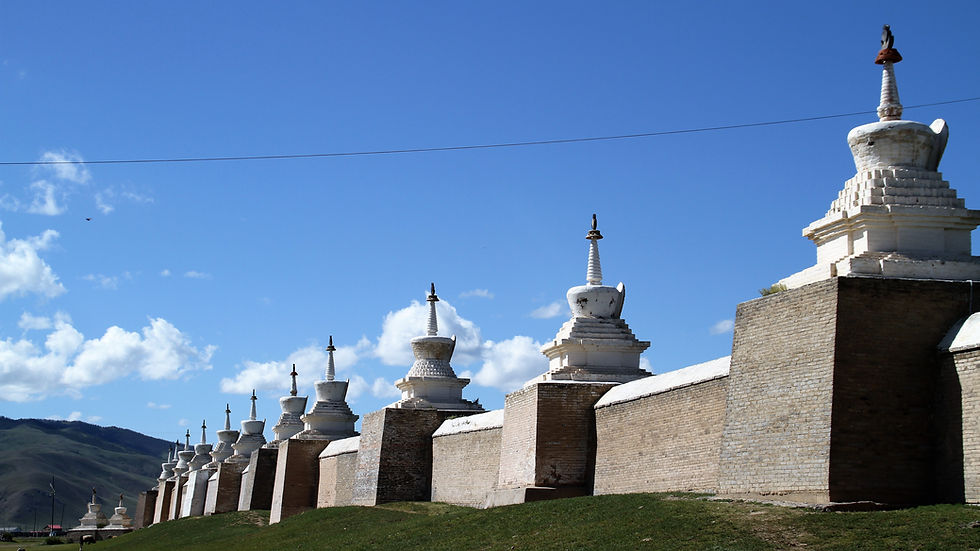
The best known is the Orkhon Valley Cultural Landscape, a UNESCO World Heritage site since 2004. The UNESCO listing covers 121,967 hectares about 360 km southwest of Ulaanbaatar. Its components include Turkic memorial sites of the 6th and 7th centuries, Khar Balgas (the 8th to 9th century Uighur capital), Kharkhorum (the 13th to 14th century Mongol capital), Erdene Zuu, which UNESCO calls the earliest surviving Mongol Buddhist monastery, and the Tuvkhun Hermitage Monastery.
In Kharkhorin itself, the Kharakhorum Museum gathers what excavations have found. Montsame reports that the museum opened in 2010 with grant funding from the Government of Japan and holds 3,128 registered artefacts, more than 80% of them from archaeology.
Older still are the deer stones. In 2023 UNESCO inscribed the Deer Stone Monuments and Related Bronze Age Sites on the slopes of the Khangai range. The stones stand up to four metres tall, are carved with stylised stags and usually sit beside large burial mounds called khirgisüür and sacrificial altars.

What is new from the archaeologists?
Research in Uvurkhangai is still producing discoveries. In August 2026 a Mongolian-Japanese team excavated the Olon Sum temple ruins in Uyanga soum, Uvurkhangai, Montsame reported on 15 September 2026. They found murals, clay statue pieces and about 30 birch-bark manuscript fragments in traditional Mongol script. The researchers date the temple to the late 16th to early 17th century, the same period as Erdene Zuu.
The partners are the Mongolian Academy of Sciences and the Mongolia-Japan "Bichees" (Inscription) Project, so both this dig and the Kharakhorum Museum have Japanese support.
What are the rules at Mongolia's ancient sites?
Look, photograph and leave everything as you found it. Mongolia's Law on the Protection of Cultural Heritage (adopted 15 May 2014) prohibits damaging tangible cultural heritage, digging in protection zones and attaching notes or signs to monuments. Contracted site guards can also ban metal detectors and special tools.
Finds belong to the state. The law says objects found on state-protected land are state property and must be reported. Mongolia's mission to the United Nations lists palaeontological and archaeological finds among items that cannot be exported without approval from the Mongolian authorities. Keep receipts for any antiques or crafts you buy, because customs may ask for them when you leave.
At working monasteries such as Tuvkhun and Erdene Zuu, the UK government's Mongolia travel advice asks visitors to request permission before taking photographs and not to touch sacred images or objects.

What this means for your trip
Do not climb on, lean on or chalk deer stones, stone figures or inscriptions, and do not pick up pottery, coins or bone fragments.
Stay on existing tracks near burial mounds; driving across a site damages it.
If you see something that looks freshly dug or damaged, tell your guide or the soum office instead of touching it.
Give the Orkhon Valley at least two nights. Our 8-day horse trekking tour through the Orkhon Valley and the 14-day Grand Tour Mongolia route both include this region.
Planning from Singapore, Malaysia, Japan or Hong Kong? The Mongolian consular service lists visa-free stays of 30 days for Singapore, Malaysia and Japan and 14 days for Hong Kong SAR (checked 24 October 2026). See our Japan to Mongolia travel guide.
For the bigger story of the Mongol capital, read our report on the New Kharkhorum city plans in the Orkhon Valley and on the Genghis Khan exhibition in Berlin, which shows finds from Mongolia until 18 April 2027.
How Enza Tours can help
We plan Orkhon Valley routes that reach the monuments on existing tracks rather than across them. We can build a heritage-focused itinerary around Kharkhorin, Tuvkhun and the deer stone sites, with time in the Kharakhorum Museum, and explain the site rules before you arrive.
Frequently asked questions
When does the Heritage Defender campaign in Uvurkhangai run?
The Heritage Defender campaign in Uvurkhangai province runs from 15 October to 1 December 2026, according to Montsame.
Where is the Orkhon Valley World Heritage site?
The Orkhon Valley Cultural Landscape lies about 360 km southwest of Ulaanbaatar in central Mongolia, according to UNESCO. It includes Kharkhorum, Erdene Zuu and Tuvkhun Hermitage Monastery.
Is it legal to take stones or artefacts home from Mongolia?
No. Under Mongolia's Law on the Protection of Cultural Heritage, finds on state-protected land belong to the state, and archaeological and palaeontological finds cannot be exported without approval from the Mongolian authorities.
What are deer stones in Mongolia?
Deer stones are Bronze Age standing stones carved with stylised stags, dated by UNESCO to about 1200 to 600 BCE. Mongolia's deer stone sites became a UNESCO World Heritage site in 2023.
Do I need a visa for Mongolia from Japan or Singapore?
No visa is needed for short stays. Mongolia's consular service lists visa-free stays of up to 30 days for citizens of Japan, Singapore and Malaysia, and 14 days for Hong Kong SAR passport holders, as of 24 October 2026.
Tours that fit this story
Hand-picked from our current programmes. See all of them on our Mongolia long tours page.
Horse trekking Mongolia travel (8 days): Orkhon Valley and the Eight Lakes on horseback.
Grand Tour Mongolia Route (14 days): Gobi, Kharkhorum, Khuvsgul Lake and Amarbayasgalant.
Sources
Montsame: Campaign Launched to Protect Immovable Cultural Heritage in Uvurkhangai (21 Oct 2026)
UNESCO World Heritage Centre: Orkhon Valley Cultural Landscape (read 24 Oct 2026)
UNESCO World Heritage Centre: Deer Stone Monuments and Related Bronze Age Sites (read 24 Oct 2026)
Montsame: Feature exhibits of Kharakhorum Museum (22 Oct 2020)
Montsame: Mongolia-Japan Archaeological Project Uncovers New Sources on Buddhism (Sep 2026)
Legalinfo.mn: Law of Mongolia on the Protection of Cultural Heritage (2014, English translation)
Permanent Mission of Mongolia to the UN: Visa and customs information
GOV.UK: Mongolia travel advice, safety and security (updated 7 Aug 2026)
Mongolia MFA Consular Department: visa-exempt countries (checked 24 Oct 2026)
About this article
Written by the Enza Tours News Desk in Ulaanbaatar and checked by our team before publishing. Every date, number and rule in this post comes from the sources listed above, which we read on 24 October 2026. Last updated: 24 October 2026.
About Enza Tours LLC. We are a Mongolian inbound tour operator, founded in 2018 by Enkhzaya (Enza), and a member of the Mongolia Tourism Organization (MTO) and the Mongolian Tourism Association (MTA). Office: Room 39, Building 33, 4th Khoroo, Baga Toiruu Street, Chingeltei District, Ulaanbaatar 15141, Mongolia. Phone +976 8911 2100 · info@mongoliantour.guide · Meet our team · Contact us