Japan to Mongolia: The Complete Travel Guide from Tokyo to the Great Steppe
- Enza Tours LLC

- Jul 19
- 4 min read
From the neon canyons of Shinjuku to a horizon with no power lines at all — few journeys deliver a greater change of scenery per flight hour than Japan to Mongolia. In less time than it takes to ride the shinkansen from Tokyo to Hakata and back, you can be standing on the open steppe, watching herds of half-wild horses drift across grassland the size of prefectures.
The essentials first: Japanese passport holders can enter Mongolia visa-free for up to 30 days, and direct flights from Tokyo Narita to Ulaanbaatar take about 5.5 hours. Mongolia is one of the closest truly wild destinations to Japan — closer than Europe, wilder than almost anywhere. Here is everything you need to plan the trip.
Do Japanese Citizens Need a Visa for Mongolia?
No visa is required. Japan is on Mongolia's visa-exemption list, giving Japanese citizens up to 30 days of visa-free tourism. Just make sure your passport is valid for at least six months beyond arrival. Staying longer? An extension can be arranged in Ulaanbaatar, or apply for a K2 tourist e-visa at evisa.mn. Full details are in our Mongolia travel visa guide.
Flights from Japan to Ulaanbaatar
Tokyo Narita (NRT) → Ulaanbaatar (UBN): MIAT Mongolian Airlines and Aero Mongolia fly this route direct in around 5.5 hours, with multiple weekly departures year-round and near-daily service in summer.
Osaka Kansai (KIX) → Ulaanbaatar: MIAT operates seasonal direct flights in the summer months (roughly June to September) — ideal for Kansai-based travelers heading to Naadam.
Connecting options: From Nagoya, Fukuoka, Sapporo and other cities, connect via Seoul Incheon (3.5-hour hop to Ulaanbaatar with MIAT, Korean Air, Jeju Air or T'way) or via Beijing (2-hour final leg).
Round-trip fares from Tokyo typically range from ¥70,000–150,000 depending on season. July (Naadam Festival) sells out early — book two to three months ahead.

Best Time to Visit Mongolia from Japan
Mongolia's travel calendar pairs beautifully with Japan's holidays. Summer (June–August) is peak season: 20–27°C days, green valleys and the Naadam Festival in July — no tsuyu rainy season, and blissfully low humidity compared to a Japanese summer. Silver Week and late September bring golden larch forests and crisp air. Winter is for the adventurous: −25°C or colder, but crystal-clear skies, eagle festivals and frozen landscapes straight out of a Hokkaido dream — magnified tenfold. See our full guide to the best Mongolia travel season.
Top Experiences for Japanese Travelers in Mongolia
Naadam Festival — Mongolia's Great Matsuri
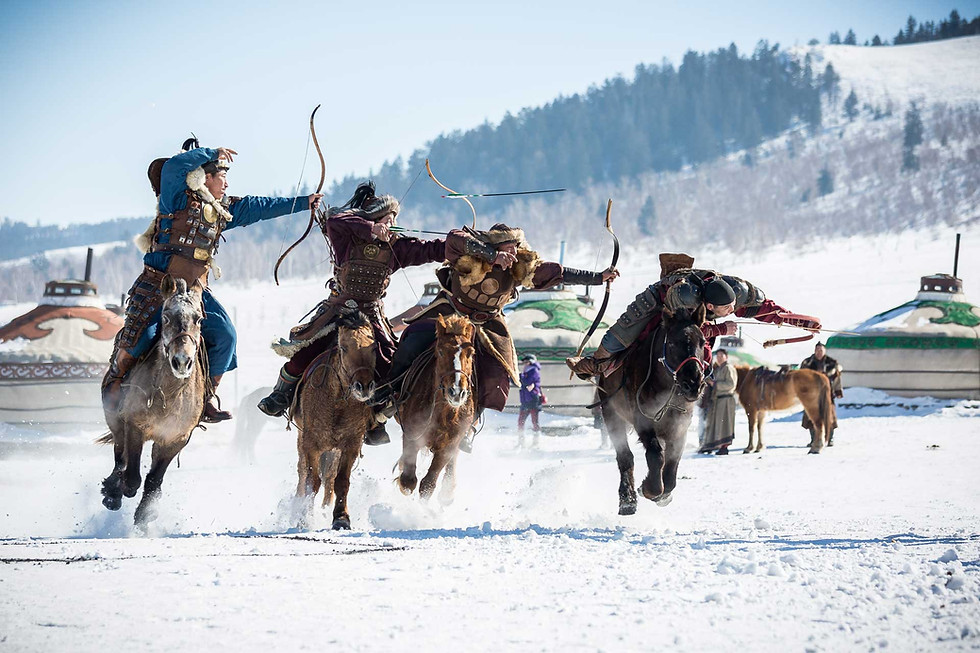
Every July 11–13, the whole nation celebrates wrestling, horse racing and archery. For sumo fans this is sacred ground: Mongolian bökh wrestling is the tradition that shaped yokozuna legends like Hakuho and Harumafuji. Watching 512 wrestlers compete in the national stadium — then seeing child jockeys race half-wild horses across the open steppe — is unforgettable.

The Gobi Desert
Camel treks over singing dunes, the sunset-red Flaming Cliffs where the first dinosaur eggs were unearthed, and ice canyons that survive even August heat. Read our Gobi Desert adventure guide for the full route.
Ger Stays and Nomadic Culture
A night in a traditional ger is Mongolia's answer to the ryokan: simple, warm, deeply hospitable. Share suutei tsai (milk tea) with a herder family, help round up the goats at dusk, and fall asleep to absolute silence. Terelj National Park is 90 minutes from the capital; Lake Khövsgöl, Mongolia's 'Blue Pearl', holds 70% of the country's fresh water and feels like Lake Tōya scaled up to an inland sea.
Suggested 8-Day Japan to Mongolia Itinerary
Day 1: Direct flight Narita → Ulaanbaatar. Evening walk on Sukhbaatar Square and welcome dinner.
Day 2: Gandan Monastery, Chinggis Khaan Museum, cashmere shopping, then drive to Terelj National Park.
Day 3: Horse riding, Turtle Rock and Aryabal Meditation Temple; overnight with a nomadic family.
Day 4–6: Fly south to the Gobi — Yol Valley ice gorge, Khongor sand dunes by camel, Flaming Cliffs sunset.
Day 7: Return to Ulaanbaatar; Tumen Ekh folk performance with khoomii throat singing and contortionists.
Day 8: Chinggis Khaan Equestrian Statue en route to the airport; direct flight home to Tokyo.
Guided private tours run from roughly USD 100–200 per person per day including 4WD transport, English- or Japanese-speaking guide options, ger accommodation and meals. A 9-day Gobi and Kharakhorum jeep expedition starts from about USD 1,800 per person — ask us for 2026 Naadam departures.
Practical Tips for Japanese Travelers
Money: The Mongolian tögrög (MNT) is the local currency. Exchange yen or USD in Ulaanbaatar; credit cards work in the city, cash in the countryside. Unlike Japan, tipping your guide and driver is customary.
Time difference: Ulaanbaatar is UTC+8, just one hour behind Japan — effectively zero jet lag.
Food: Expect hearty mutton, beef, dairy and dumplings — khorkhog (stone-cooked lamb) is the dish to try. Ulaanbaatar also has excellent Japanese, Korean and vegetarian restaurants for when you miss home.
Connectivity: Local SIMs (Unitel, Mobicom) are cheap at the airport. Coverage vanishes in remote valleys — download offline maps before leaving the city.

Frequently Asked Questions: Japan to Mongolia
How long is the flight from Tokyo to Mongolia?
Direct flights from Tokyo Narita to Ulaanbaatar take approximately 5.5 hours. Connecting routes via Seoul or Beijing take 8–12 hours total depending on the layover.
Do Japanese citizens need a visa for Mongolia?
No — Japanese passport holders can stay up to 30 days visa-free for tourism. No advance application is required.
When is the Naadam Festival?
The national Naadam is held every year on July 11–13 in Ulaanbaatar, with smaller regional naadams across the countryside through July. Tours for Naadam should be booked by April or May.
Is Mongolia expensive for Japanese travelers?
Mongolia is generally cheaper than domestic travel in Japan. Budget ¥15,000–30,000 per day for a quality guided tour including accommodation, meals and transport.
Can I use Japanese yen in Mongolia?
Yen can be exchanged at banks and exchange offices in Ulaanbaatar at fair rates, though USD is more widely accepted. Pay in tögrög (MNT) everywhere.
Ready for the Wide-Open Steppe?
Enza Tours LLC is a licensed Mongolian tour operator creating private and small-group journeys for travelers from across Asia — see how our guests travel on the Singapore to Mongolia route. Email info@mongoliantour.guide or WhatsApp +976 8911 2100 to reserve your 2026 Japan to Mongolia adventure. Yoi tabi o — the steppe is waiting!